
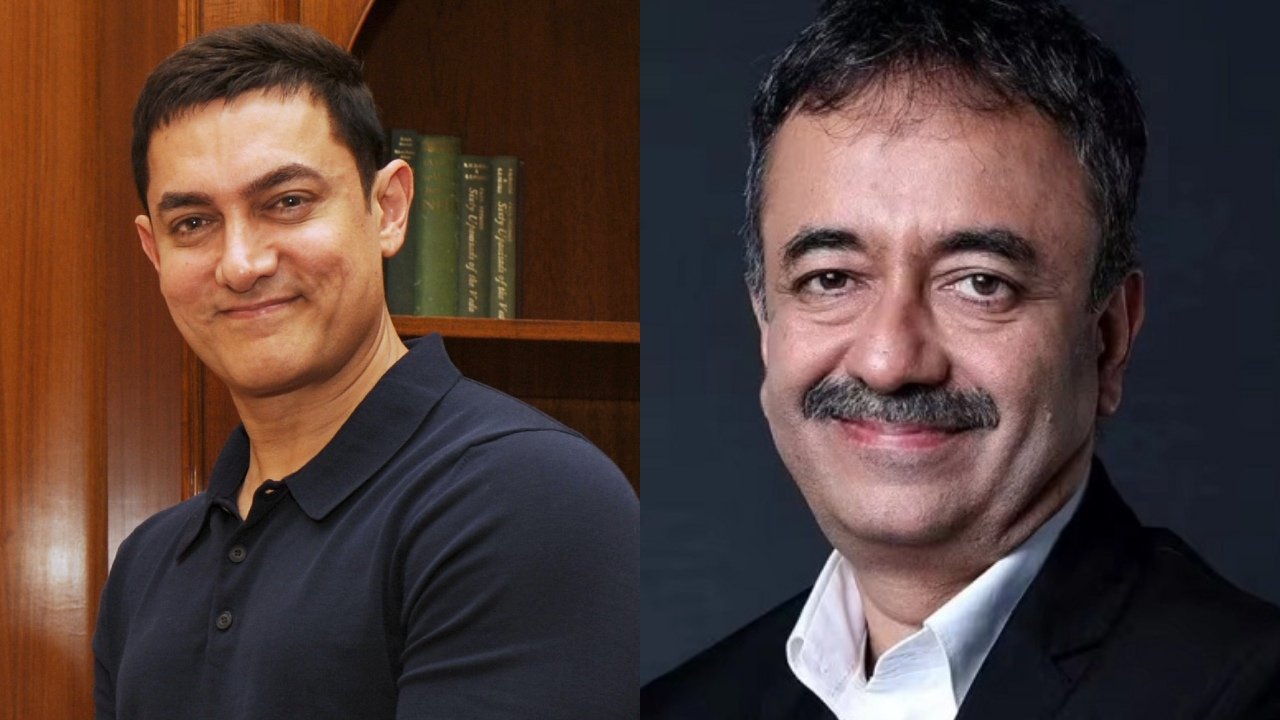
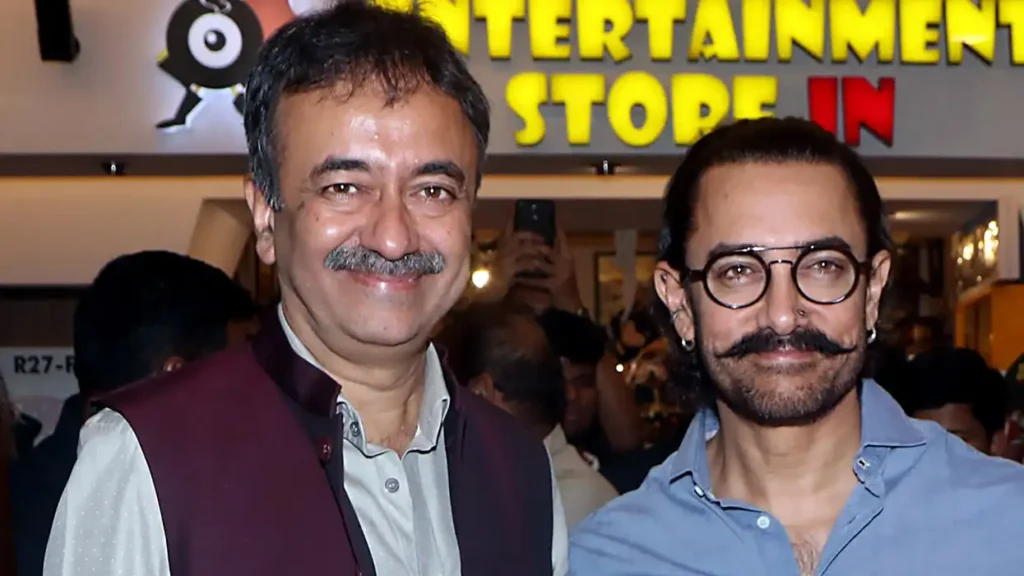
In an industry where projects are announced with fanfare and rushed into production to capitalize on market momentum, Aamir Khan and Rajkumar Hirani stand apart. Their collaboration has consistently produced films that aren’t just commercially successful but culturally significant—3 Idiots redefined campus dramas, while PK sparked national conversations about faith and reason. So when the duo announced their third collaboration earlier this year, a biopic on Dadasaheb Phalke, the father of Indian cinema, expectations soared. The combination seemed perfect: a visionary filmmaker known for emotionally resonant storytelling tackling the life of India’s pioneering filmmaker, with an actor renowned for his commitment to authenticity bringing that pioneer to life.
But in a development that has sent shockwaves through Bollywood, reliable sources have confirmed to Bollywood Hungama that the Dadasaheb Phalke biopic has been shelved. Not delayed, not postponed—shelved. And the reason reveals everything about what separates Khan and Hirani from their peers: an uncompromising commitment to getting it right, even if that means walking away from a project that has already generated significant buzz.
According to sources close to the production, the decision came down to script quality. Despite multiple rewrites and countless sessions between the two perfectionists, they couldn’t crack the narrative in a way that satisfied their exacting standards. Aamir reportedly felt the script was “too dry for the audience in today’s world” and lacked the humor that audiences have come to expect from a Hirani-Khan collaboration. It’s a remarkably candid assessment from an actor who could easily have powered through with a serviceable script, banking on the goodwill built by his previous work and the inherent interest in Phalke’s story.
The challenge they faced is both specific and universal. Dadasaheb Phalke’s life and achievements are undeniably significant—he made Raja Harishchandra in 1913, India’s first full-length feature film, overcoming immense technical, financial, and social obstacles. His journey from watching The Life of Christ in a London cinema to creating an entirely new art form in India is the stuff of legend. On paper, it’s a biopic goldmine: struggle, innovation, triumph, and a legacy that spans over a century.
But Phalke lived and worked in an era vastly different from our own. The early 20th century was a time of social conservatism, colonial rule, and technological limitations that are difficult for contemporary audiences to fully grasp. Making a film about silent cinema—with all its technical constraints and different storytelling grammar—presents narrative challenges that even the most skilled filmmakers struggle with. How do you make the process of early filmmaking visually and emotionally engaging for an audience raised on CGI spectacles and rapid-fire editing? How do you inject humor into a story about a man working in circumstances of extreme difficulty? How do you avoid the trap of making a biopic feel like a reverential history lesson rather than compelling cinema?
These are the questions that Hirani and Khan apparently couldn’t answer to their satisfaction. And rather than compromise, they chose to walk away. It’s a decision that speaks volumes about their artistic integrity but also raises questions about the viability of certain historical biopics in the current market climate.
The source’s statement that “a personality as iconic as Dadasaheb Phalke deserves a script that is both emotionally stirring and universally engaging” is particularly telling. It acknowledges the weight of responsibility that comes with depicting the father of Indian cinema. A mediocre or merely competent film about Phalke wouldn’t just be a commercial disappointment—it would be a disservice to his legacy. For Khan and Hirani, that was apparently a risk not worth taking.
The decision also reflects a broader challenge facing biopics in contemporary Indian cinema. Recent years have seen a flood of biographical films with varying degrees of success. For every well-executed biopic that balances historical accuracy with entertainment value, there are several that feel either too reverential or too liberally fictionalized. The sweet spot—where truth meets compelling storytelling—is notoriously difficult to hit, especially when the subject lived in an era that feels remote to modern audiences.
What makes this shelving particularly significant is the track record of both Khan and Hirani. These aren’t filmmakers prone to missteps or hasty decisions. Aamir’s reputation as a perfectionist is well-documented—he famously takes years between projects, involving himself deeply in script development, and has turned down numerous offers that don’t meet his standards. Hirani, meanwhile, has an almost unblemished record at the box office, with each of his films becoming both critical and commercial successes. When this duo says a script isn’t working, it carries weight.
The collaborative nature of the decision is also noteworthy. This wasn’t Aamir pulling out of a Hirani project or Hirani losing faith in his star—it was a mutual acknowledgment that they hadn’t cracked the story. According to sources, they “collectively decided to put the project on hold,” suggesting a shared understanding that sometimes the best creative decision is knowing when to stop.
Now both are moving on to other projects, though with the caveat that they will “definitely reunite on something else.” Aamir is reportedly reading through approximately 20 scripts and is expected to announce his next project in the first quarter of 2026. Given his selection process, which involves months of deliberation and often direct involvement in script development, this timeline suggests he’s taking his time to find the right material. For an actor who has consistently bet on scripts that offer either strong social commentary or unique storytelling approaches, the search for his next vehicle will be closely watched.
Hirani, too, is in the process of identifying his next subject and will begin writing soon. With his track record—Munna Bhai M.B.B.S., Lage Raho Munna Bhai, 3 Idiots, PK, and Sanju—every new Hirani film is an event. His ability to blend entertainment with meaningful messaging, to make audiences laugh while making them think, is rare in commercial cinema. Whatever he chooses next will automatically become one of the most anticipated projects in Bollywood.
The shelving of the Phalke biopic also raises interesting questions about which historical figures make for compelling cinematic subjects in the modern era. Phalke’s achievements are foundational to Indian cinema, but his story plays out largely in technical and creative problem-solving rather than interpersonal drama or large-scale conflict. Compare that to more recent successful biopics—films about athletes, freedom fighters, or controversial public figures—where the dramatic arcs are more naturally suited to cinematic treatment.
There’s also the matter of relatability. Audiences connect with stories where they can see themselves or understand the emotional stakes. A story about making India’s first film in 1913 requires significant contextual setup—explaining the social mores, the technology, the economic conditions—that can slow down narrative momentum. Perhaps Khan and Hirani realized that no matter how they approached it, the story required too much historical baggage to achieve the lightness and universality they wanted.
The decision might also reflect changing market dynamics. Post-pandemic, the theatrical landscape has become increasingly unforgiving to films that don’t immediately grab audience attention. Period films, especially those requiring significant historical context, face an uphill battle unless they’re packaged as grand spectacles or have strong emotional hooks that transcend their historical settings. A nuanced, character-driven biopic about early cinema—no matter how well-executed—might have struggled to find its audience in today’s environment where social media buzz and word-of-mouth are driven by immediate emotional impact.
For cinephiles and those interested in the history of Indian cinema, the shelving is disappointing. A well-made film about Dadasaheb Phalke could have introduced new generations to the pioneering work that laid the foundation for the industry they love. It could have sparked interest in early Indian cinema and perhaps even led to restoration efforts for surviving films from that era. The educational and cultural value of such a project extends beyond its commercial prospects.
But perhaps there’s wisdom in knowing when to walk away. Better to shelve a project with dignity than to release a film that doesn’t live up to the standards set by the subject and the filmmakers involved. The film industry is littered with examples of projects that should have been stopped earlier, where warning signs were ignored in favor of pushing forward. Khan and Hirani’s decision to pull the plug, despite the sunk costs and public anticipation, demonstrates a level of artistic courage that’s increasingly rare.
It also sets an interesting precedent. In an era where content is king and there’s pressure to constantly produce, where streaming platforms and theatrical windows create perpetual demand for new material, here are two of Bollywood’s biggest names saying “no, we’re not doing this until it’s right.” It’s a statement that quality matters, that legacy matters, and that not every story needs to be told simply because it seems important on paper.
The silver lining in all this is the promise of a future collaboration. Khan and Hirani clearly work well together—their previous films have been characterized by a shared sensibility that balances entertainment with substance. Whatever they ultimately choose to work on next will benefit from the lessons learned during the Phalke project. Sometimes the value of a shelved project isn’t the film that never was, but the insights gained about what works and what doesn’t, what audiences respond to and what leaves them cold.
As Aamir wades through his 20 scripts and Hirani begins conceptualizing his next subject, the industry watches with interest. Both have earned the luxury of being selective, of taking their time, of saying no to projects that don’t excite them. In a business built on risk and compromise, they’ve carved out space for uncompromising artistry.
The Dadasaheb Phalke biopic may be shelved, but the story of why it was shelved tells us something valuable about what separates good cinema from great cinema—the wisdom to know the difference and the courage to act on it. Sometimes the best film is the one you don’t make, at least not yet, at least not until you’ve found the way to tell it that does justice to both the subject and the audience. For Aamir Khan and Rajkumar Hirani, that moment hasn’t arrived for this particular story. But when they do find the right material for their next collaboration, it will have been worth the wait.
