


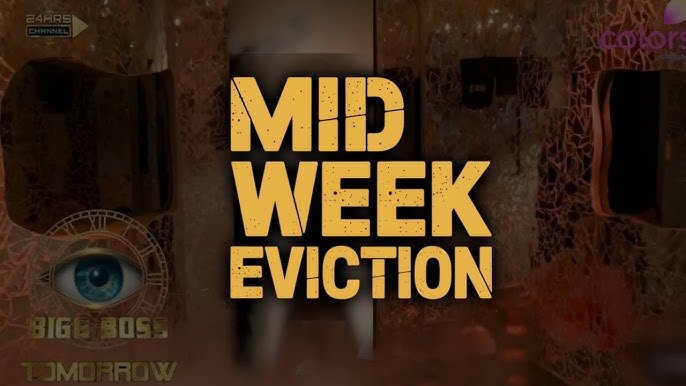
Just when the Bigg Boss 19 contestants thought they could catch their breath after the shocking double elimination of Abhishek Bajaj and Neelam Giri, the show has thrown another curveball. A mid-week elimination has been announced, sending shockwaves through the house and reminding everyone that in Bigg Boss, safety is always temporary and comfort is always illusory.
The official announcement, teased on Colors TV and JioHotstar, promises to reveal who stays safe and who gets eliminated during the week—breaking from the traditional Weekend Ka Vaar elimination pattern that contestants and viewers have come to expect. It’s a format twist that Bigg Boss has employed sporadically over its 19 seasons, and each time it does, it fundamentally alters the game being played inside those walls.
Mid-week eliminations aren’t just about removing contestants—they’re about psychological warfare. When eliminations only happen on weekends, contestants develop a rhythm. They know they have a full week to recover from nominations, to strategize, to repair damaged relationships or forge new alliances. The weekend becomes a deadline, and human psychology is remarkably good at dealing with known deadlines. But throw in a mid-week elimination, and that sense of predictability evaporates. Suddenly, every day could be your last day. Every conversation could be your final strategy session. Every alliance could dissolve before you’ve had time to leverage it.
For the current crop of Bigg Boss 19 contestants—Kunickaa Sadanand, Amaal Malik, Malti Chahar, Pranit More, Mridul Tiwari, Gaurav Khanna, Farrhana Bhatt, and Ashnoor Kaur—this mid-week elimination comes at a particularly volatile moment. The house is still reeling from losing two major personalities in Abhishek and Neelam. Power dynamics are in flux. New alliances are forming in the vacuum left by departed contestants. And just as everyone is trying to find their footing in this new configuration, Bigg Boss pulls the rug out again.
The timing is almost certainly deliberate. Reality television thrives on keeping contestants off-balance, and the producers of Bigg Boss have decades of experience in knowing exactly when to introduce chaos. Coming so soon after a double elimination, a mid-week eviction prevents the house from settling into any comfortable patterns. It keeps everyone on edge, which in television terms means better content, more emotional reactions, and higher drama—all the ingredients that keep audiences tuning in night after night.
But beyond the entertainment value, mid-week eliminations serve specific strategic purposes for the show. They allow producers to course-correct if the season is losing momentum. If viewer voting patterns suggest that certain contestants are becoming dead weight—not controversial enough to drive conversation but not likable enough to root for—a mid-week elimination can remove them without waiting for the weekend. It’s a way of keeping the season lean and ensuring that every remaining contestant serves a narrative purpose.
These surprise eliminations also function as ratings boosters. The announcement itself generates buzz on social media, with fans speculating about who’s in danger and why. The uncertainty drives viewership—people who might skip a regular weekday episode will tune in to see who gets eliminated. And because mid-week eliminations are relatively rare, they carry an event quality that regular weekend eliminations sometimes lack through sheer familiarity.
From a contestant’s perspective, mid-week eliminations completely upend conventional Bigg Boss strategy. The traditional playbook involves performing for the weekend, knowing that’s when Salman Khan and the cameras are most focused on you, when your behavior will be scrutinized and your gameplay evaluated. Contestants often strategize around weekend episodes—making big moves, having important conversations, or creating memorable moments timed for maximum impact during Weekend Ka Vaar.
But mid-week eliminations mean you can’t pace yourself. You can’t save your best gameplay for the weekend or try to lie low during the week. Every single day becomes crucial. Every interaction could influence public perception and voting patterns. It’s exhausting, both physically and mentally, but it also tends to bring out more authentic behavior. When contestants can’t strategically time their actions around weekend episodes, what viewers see is closer to their genuine personalities rather than carefully calibrated performance.
The psychological toll of mid-week eliminations extends beyond the person who gets evicted. For those who survive, there’s a complex mix of relief and renewed anxiety. Relief that they’re safe for now, but anxiety because if Bigg Boss can eliminate someone on a Wednesday, what’s to stop it from happening again on Thursday? The traditional week-long cycle of nomination, tension, and weekend resolution gets replaced by a constant state of vigilance that wears down even the strongest competitors.
This also affects alliance dynamics in fascinating ways. In a normal week, alliances have time to solidify. People make deals on Sunday or Monday, confident they have until the following Saturday to deliver on promises or adjust strategies based on how the week unfolds. But introduce a mid-week elimination, and suddenly those alliances need to be activated immediately. There’s no time for slow-burning strategy or waiting to see how things play out. Decisions need to be made quickly, loyalties need to be declared immediately, and that rushed decision-making often leads to mistakes that provide great television.
Looking at who might be vulnerable in this mid-week elimination requires understanding the current house dynamics post the double eviction. With Abhishek and Neelam gone, the house has lost two major conflict generators. The question becomes: who among the remaining contestants is expendable from a narrative standpoint?
Contestants who’ve been flying under the radar without contributing much to the season’s storylines could be in danger. Bigg Boss viewers are remarkably good at identifying who’s just occupying space versus who’s driving narrative forward. Someone who’s been coasting on survival instincts without providing memorable moments or compelling gameplay becomes an obvious target when the show wants to trim the cast.
Conversely, contestants who’ve been involved in recent controversies but lack the viewer support to weather them might also be vulnerable. The line between “controversial enough to be entertaining” and “controversial enough to be unlikable” is thin, and mid-week eliminations often target those who’ve crossed into the latter category without the popularity buffer to protect them.
Ashnoor Kaur’s position is particularly interesting. Fresh off surviving the previous elimination round and freed from the overshadowing presence of Abhishek Bajaj, she’s in a transitional moment where she needs to establish her individual identity in the house. A mid-week elimination happening right now doesn’t give her much time to do that, but if she survives, it confirms she has genuine viewer support independent of any relationship dynamics.
For veterans like Kunickaa Sadanand or established names like Amaal Malik, their paths forward depend on whether they’ve managed to stay relevant in the post-double-elimination house. Fame and prior success outside Bigg Boss only carry contestants so far—inside the house, you’re constantly being evaluated on current performance, not past achievements. If either has been fading into the background, this mid-week elimination could be the wake-up call that they’re in danger, or it could be the end of their journey.
The format of mid-week eliminations also varies. Sometimes it’s based purely on audience votes, making it a true referendum on who viewers want to see continue. Other times, housemates have a say, either through direct voting or through tasks that influence who’s vulnerable. The announcement teaser doesn’t specify which format this elimination will follow, adding another layer of uncertainty for contestants.
If it’s a housemate vote, then all the alliance work and social relationships that have been building suddenly matter immensely. Who’s managed to stay in everyone’s good graces? Who’s burned bridges with too many people? Who’s seen as a strategic threat that needs to be removed before they become too powerful? These considerations come to the forefront, and contestants who thought they had time to build social capital suddenly realize they needed to have been working on it all along.
If it’s based on audience voting, then screen time and memorable moments become crucial. Who’s been giving viewers reasons to vote for them? Who’s provided entertainment value or emotional connections that make audiences invested in their journey? The harsh reality of viewer-based eliminations is that being a “good person” isn’t enough—you need to be compelling television, and not everyone understands the difference.
From a production standpoint, mid-week eliminations also serve as pressure release valves. If the house has become too toxic or if certain conflicts have escalated beyond entertainment into genuinely uncomfortable territory, removing a key player mid-week can reset the atmosphere. It’s a way of managing the house ecosystem without waiting for the weekend, ensuring that the environment remains conducive to the kind of drama viewers want to see rather than the kind that makes them change the channel.
The announcement itself—”Who will remain safe and who will be eliminated?”—is classic Bigg Boss suspense-building. It tells viewers nothing concrete while promising everything dramatic. It’s designed to drive social media speculation, increase episode viewership, and keep Bigg Boss trending on platforms where public discourse happens. In the modern reality television landscape where social media engagement is as important as television ratings, these teaser announcements are strategic tools for maintaining relevance.
For fans of Bigg Boss 19, this mid-week elimination represents another data point in understanding how this season is being managed. The quick succession of a double elimination followed by a mid-week elimination suggests the producers are actively shaping the season’s trajectory, possibly because early episodes weren’t generating the kind of heat they wanted, or because they want to accelerate the timeline toward a tighter, more intense final few weeks.
It also raises questions about how many contestants the show plans to have in the finale and how quickly they want to get there. Bigg Boss seasons vary in length and in the number of finalists, and the pace of eliminations often indicates what the endgame looks like. Rapid eliminations suggest a shorter season or plans for wildcard entries that will shake up the game later. Slower eliminations indicate a longer arc with more time for character development and relationship dynamics to play out naturally.
Whatever the strategic reasoning behind this mid-week elimination, the immediate effect is clear: the Bigg Boss 19 house is a pressure cooker with the heat turned up. Contestants who thought they had a week to breathe now realize they have hours or at most a day or two. Alliances that were forming need to be solidified immediately. Strategies that were being carefully plotted need to be executed right now. And viewers who were settling into the season’s rhythm are reminded that with Bigg Boss, comfort is never part of the deal.
The beauty of mid-week eliminations from a viewer’s perspective is that they democratize vulnerability. In a normal week, you can generally predict who’s in danger based on Weekend Ka Vaar interactions and Salman Khan’s feedback. But mid-week eliminations can blindside both contestants and audiences. Someone who seemed safe can suddenly be gone, while someone who appeared doomed survives another day. It’s the kind of unpredictability that keeps reality television exciting and prevents viewers from checking out mentally because they think they know how things will play out.
As the episode airs and the elimination is revealed, it will send ripples through both the house and the viewing audience. Whoever leaves will have their Bigg Boss journey cut short without the traditional weekend send-off, without the chance to hear Salman Khan’s final thoughts on their game. For the survivors, the message is clear: safety is ephemeral, and the game never sleeps. For viewers, it’s a reminder of why Bigg Boss remains appointment television after 19 seasons—because just when you think you understand the rules, the show changes them.
The mid-week elimination in Bigg Boss 19 isn’t just about removing one contestant. It’s about psychological warfare, strategic recalibration, maintaining narrative momentum, and reminding everyone—inside the house and watching from outside—that Bigg Boss is a game that refuses to be comfortable. And in a season that’s already seen dramatic double eliminations and ongoing controversies, this latest twist suggests that the drama is far from over. If anything, it’s just getting started.
